
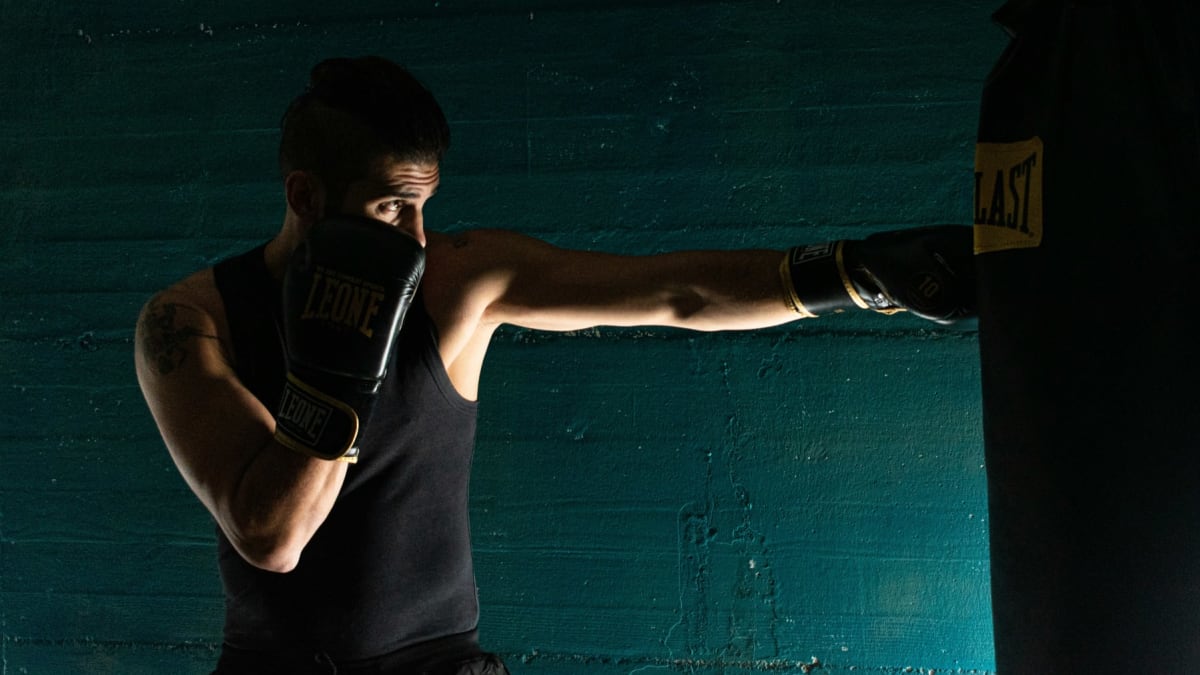
Before you throw a punch
- Wrap your hands. Wraps support the small bones of the hand and the wrist; most hand injuries on the bag come from hitting unwrapped or with a bent wrist.
- Use bag gloves or 14–16 oz training gloves. Heavier gloves protect the hands while you learn.
- Learn the stance first. Feet shoulder-width, lead foot forward, knees soft, hands up, chin down. Everything else comes from here.
The four punches
Jab, cross, lead hook, rear uppercut. Land with the first two knuckles, wrist straight, and bring the hand straight back. Do not swing wide and do not push the bag; snap and return. A short overview of the sport's fundamentals is on the boxing entry.
A 20-minute beginner routine
| Round | Work (2 min) | Rest |
|---|---|---|
| 1 | Jab only, moving around the bag | 1 min |
| 2 | Jab-cross, focus on returning hands | 1 min |
| 3 | Jab-cross-hook | 1 min |
| 4 | Free combinations, light | 1 min |
| 5 | Last 30 seconds of each minute: fast straight punches | 1 min |
| 6 | Shadowbox cool-down, no bag | — |
Use the Combo Caller timer for rounds; it calls combinations so you are not inventing them mid-round. Footwork between rounds is covered in shadowboxing drills, and conditioning for longer sessions in jump rope for fighters.
Common mistakes
- Standing flat-footed and square to the bag
- Dropping the non-punching hand
- Hitting with the ring and pinky knuckles
- Going hard every round; power comes after mechanics
If wrist or hand pain shows up and stays, stop and have it looked at; the AAOS patient site explains common hand and wrist injuries in plain language. Starting later in life is fine; see boxing after 40.
KX
KUNGFOOLX editorialWritten from public research summaries and established coaching practice, reviewed for general accuracy. Not medical advice; individual needs vary. Talk to your physician or a qualified coach before changing your training.